ВЫСШАЯ МЕРА
Highest Measure - Brecht, Eisler, Tretiakow
World premiere
Meyerhold Center Moscow
Director
Fabiane Kemmann
Musical Director, Piano
Peter Aidu
Conductor
Andrey Kotov
Starring
Margarita Breitkreiz, Ekaterina Migizko, Fjodor Levin, Anastasiia Lebedeva, Jana Gladkich, Philip Gurevitsch, Pavel Voronschzov
Choirs
Ensemble Komon, Meyerhold Center Choir, Dreamers Actors
Amateur Coirs
Childrens Choir Scarlet Sails, Chamber Choir Carpe Diem of the National Research Institute of Technical Physics, Vocalensemble of the Moscow Institut for Technology and Physics, Choir of Moscows Teachers, Womans Choir Consonance, Academic Choir Enthusiast
Dramaturgy
Elena Kovalskaya
Stage
Fabiane Kemmann
Light
Max Berukov
Consulting
Vladimir Koljazin, Olga Fedjanina, Albrecht Maurer
Projektmanagment
Tatjana Schepatova
Assistant
Denis Merkulov
Patron
Jean Ziegler
ВЫСШАЯ МЕРА
Highest Measure - Brecht, Eisler, Tretiakow
World premiere
Meyerhold Center Moscow
Высшая мера - Ангелина Александровна Варганова
Высшая мера, Meyerhold Center Moscow 2018
In the overwhelmingly marrow-shaking finale, you regret that the Meyerhold Centre is not the Bolshoi Theatre, where there would be a thick booklet and a complete libretto, which is not usual in the theatre. Then, as in opera, the whole cantata performance could be watched again with the inner eye after the performance and, above all, heard with the inner ear, so extraordinary is it. It is very easy to imagine "Высшая мера" literally in this production on the Bolshoi's (formerly Pokrovsky Theatre's) new chamber stage, with its almost geometric resemblance, blackness and the choir on the balconies above the audience. Nevertheless, it is still a good thing that ZIM is not the Bolshoi, otherwise the path of "Высшая мера" to the Russian stage would have been, it seems, another century longer. Julia Bederova, We Heard the Fall, Kommersant 2018
It's a colossal work, though not too long, it's songs, it's a work about the viewer, it's an attempt to involve him, it's big choruses, mass bodies standing above and commenting on tragic events. The whole show is a report to the choir, which is their supreme court and part of their superego, these are beautiful, sculptural entities. The performance is very beautiful, vividly expressive, fascinating, existential and almost horrifying - it evokes many feelings. We are immersed by this story into a time machine. And this is, of course, an eternal question inherent in man, but since it has to be solved anew in every historical phase, it is another question that Brecht's play puts before us: Is it possible to at least think about another option? Elena Fanailovna, Высшая мера, Radio Liberty 2018
It is a theatre in which drama, comedy and tragedy are drained to the skeleton, to the core, in which the role of ancient terrain is played by objective reality - in which each hero is confronted with a whole series of questions to which there are no right answers. Or rather, every answer inevitably leads to tragedy and death. The only way to stay alive is to keep asking. The questions being asked are about very basic, elementary things - the right to life, the right to make mistakes, the right to make an independent decision. The greatest difficulty 20th century theatre has had with this play is its inability - and unwillingness - to begin any performance without a prepared cheat sheet of the answer in its pocket. Brecht's theatre, however, was never a consensus theatre. This is a play that ideally makes you ask even more questions - because, if I remember correctly, the ability to keep asking here is tantamount to the ability to survive. Olga Fedianina, The Festival 'Home of the Avantgarde' at ZIM, Theater.dot 2018
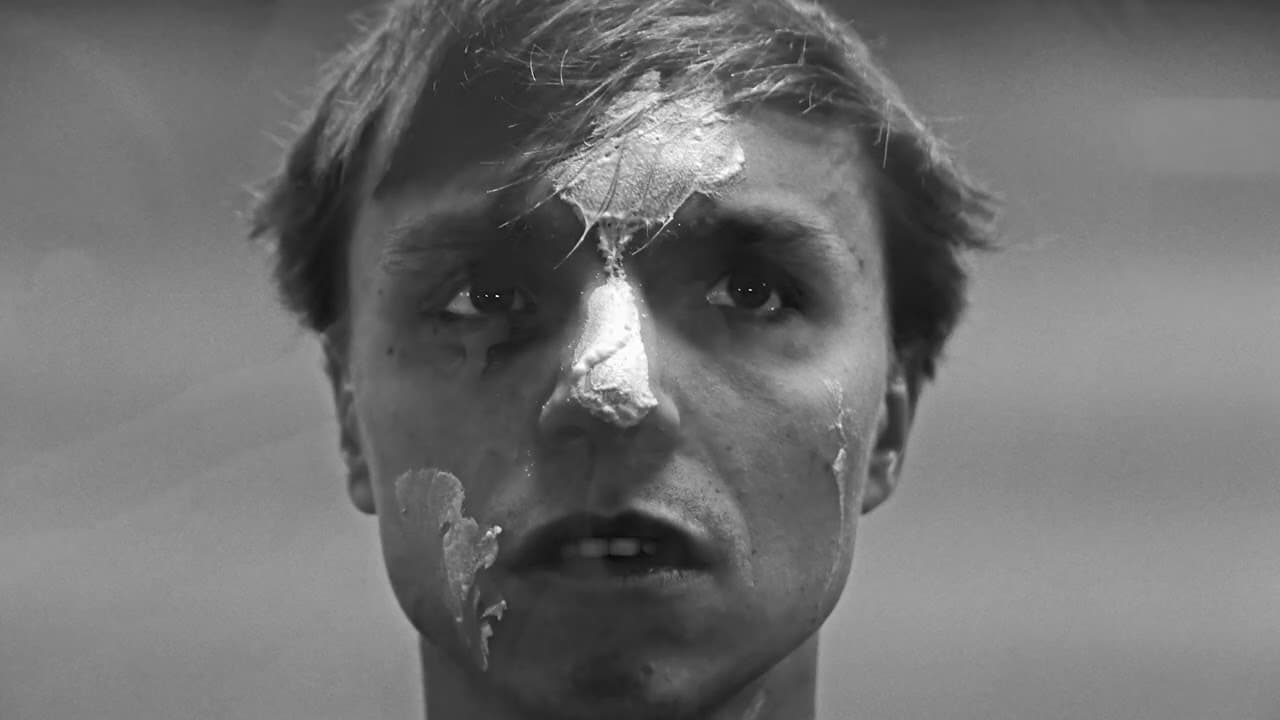
For the premiere at the Meyerhold Centre, director Fabiane Kemmann drew on Russian-German actors, including artists from the famous Volksbühne Theatre. The choral groups on the balconies commented on the action like the ancient Greek choruses of tragedy. Spectators who recited the text, including quotes from Lenin, according to an unnotated score (before the performance in the foyer, Peter Aidu held a mini-rehearsal), with revolutionary leaflets handed to them by the agitators, judged on an equal footing with the chorus. As in reality, each of them had a choice - to join the masses, to chant the phrase "We agree with you" or to watch the massacre in silence. Nadezhda Travina, Brave, Comrade, into the Fight, The free 2018