THE DECISION
Bertolt Brecht, Hanns Eisler
Berlin Philharmonic
First staging in the original form with 300 singers
Director
Fabiane Kemmann
Artistic Consultant
Barbara Nicolier
Musical Director
Markus Crome
Starring
Margarita Breitkreiz, Bernd Grawert, Ole Lagerpusch, Matthias Rheinheimer, Reiner Steinweg, Reinis Vidulejs
Soprano
Winnie Böwe
Choir
Con Passione, Coro Contrapunto, Erich Fried Choir, Ernst Busch Choir, GEBEWO Brückeladen Choir, Hanns Eisler Choir, Hard Choir “ELLA,” Politchor, RATTEN 07, Project choir with singers from the Volksbühne Workers' Choir and singers in singular initiative, Sign Language Choir
Orchestra
Orchestra of The Decision at Volksbühne in 2008
THE DECISION
Bertolt Brecht, Hanns Eisler
Berlin Philharmonic
First staging in the original form with 300 singers
The Decision - Child, watching
The Decision, Learning play by Bertolt Brecht, Hanns Eisler Opus 20, Philharmonie Berlin 2016
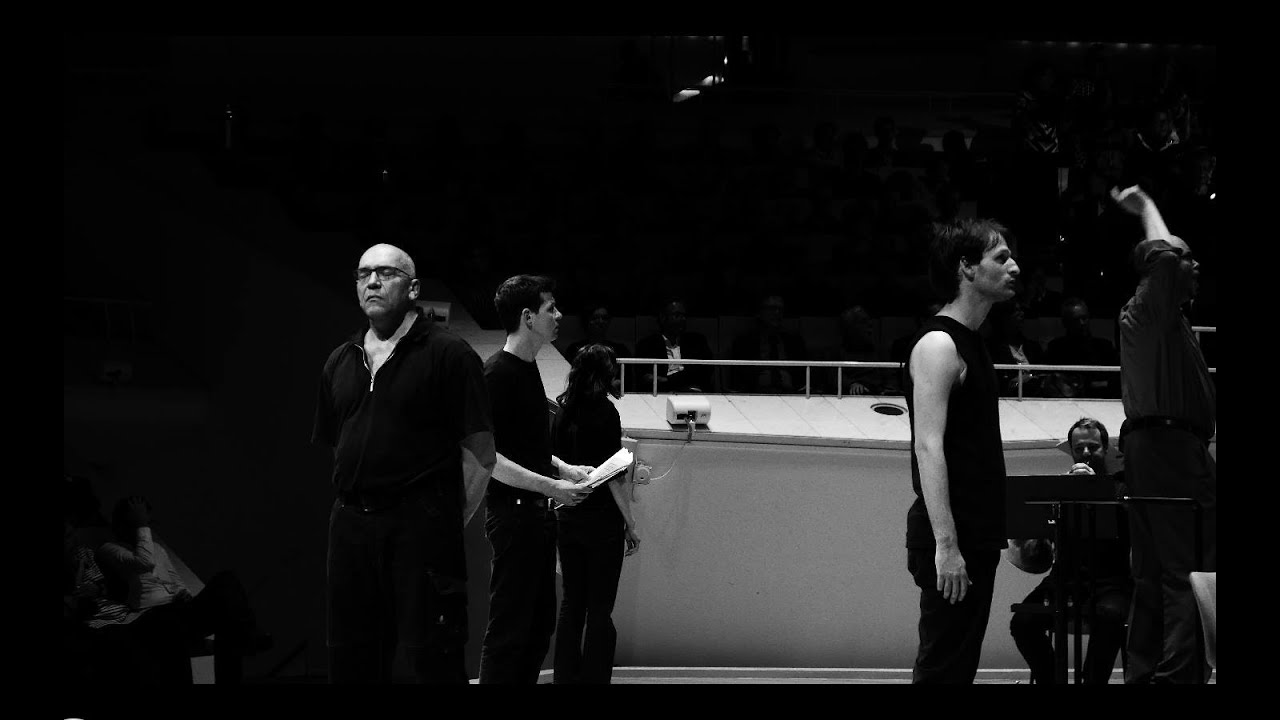
But who would have thought that "The decision" would one day return to its place of performance, at least virally. That was the old Philharmonic Hall in December 1930. The old Philharmonic Hall no longer exists, but it's all the more wonderful that this highly poetic didactic piece, born of the hopes of the October Revolution in Russia, has now been repeated in the most dignified manner in the Chamber Music Hall of the Hans Scharoun Building. With a concentrated load of choirs from all corners of the capital, about 300 committed amateur singers, with a no less committed wind ensemble plus piano, timpani and percussion, with the proven and excellent Eisler interpreter Winnie Böwe and an Agigators quartet of young actors who, together with the choirs and instrumentalists, took the Lehrstück to the level of tragedy. Director was Fabiane Kemmann. The chamber music hall was bursting at the seams. A keen project. Despite some technical shortcomings, the audience in the Berlin Philharmonie experienced a tragedy of Shakespearean magnitude. Stefan Amzoll, Compassion? A mistake, Neues Deutschland 2016
Eisler's music has its own aesthetic, which has nothing to do with romantic beauty. But it has already achieved one thing: to open hearts and minds to a message that is still relevant today - change the world, it needs it. Heino
Rindler, Brecht's Lehrstück als Konzert, Deutschlandfunk Kultur 2016
In Eisler's music, Bach's Passions repeatedly come through. Strong stuff that was first banned by the Nazis and then by Brecht himself after the war. Eisler's art still acquires an astonishing presence. The fact that the author ultimately did not succeed in erasing his own play is a liberating signal of this revival. Ulrich Amling, Ausgelöscht und auferstanden, Tagesspiegel 2016
The four agitators were first-class: Margarita Breitkreuz, Bernd Grawert, Ole Lagerpusch and Matthias Rheinsheimer. Their play-within-a-play ("Act it out as it happened!") cited various performance styles of Brecht's theatre, ranging from the emphatically improvisatory "reading from a piece of paper" and "only hinting at actions" to committed and satirical agitprop play and alienated dialogue with offset echo effects. Brecht's biblical language of action came into its own with full force. Even in the announcements of the scene titles by Reiner Steinweg and Reinis Vidulejs, interesting nuances were struck. Peter Deeg, The Decision with almost 300 voices in Berlin, Eisler Mitteilungen 2016